Keeping the fire Kindling
Daisy Auger-Domínguez is a Global Chief People Officer at a fintech company and author of Burnt Out to Lit Up and Inclusion Revolution. With two decades leading people strategy at Google, The Walt Disney Company, Moody's Corporation and VICE Media, she advises executive teams and boards on building cultures that perform at scale without burning out in the process. A TEDx speaker and Forbes contributor, she helps leaders navigate complexity and lead what’s next, not what wears them down.
Today she is also the author of my Business School assigned reading from Dr. Dr. Fabian Bernhard, (no that’s not a typo, that’s a double PHD).
A few years ago, Daisy was an acquaintance, a woman I met for a lovely afternoon in Coconut Grove. We were introduced by a mutual friend. Throughout these years, I admittedly watched with awe as she continued to evolve in her practice and tuned into the insights she shared on her channels. I cheered her on as she made headway into new projects. I can’t vividly recall the conversations that were had over lunch in Florida but I can’t shake the remarkable impression she left on me.
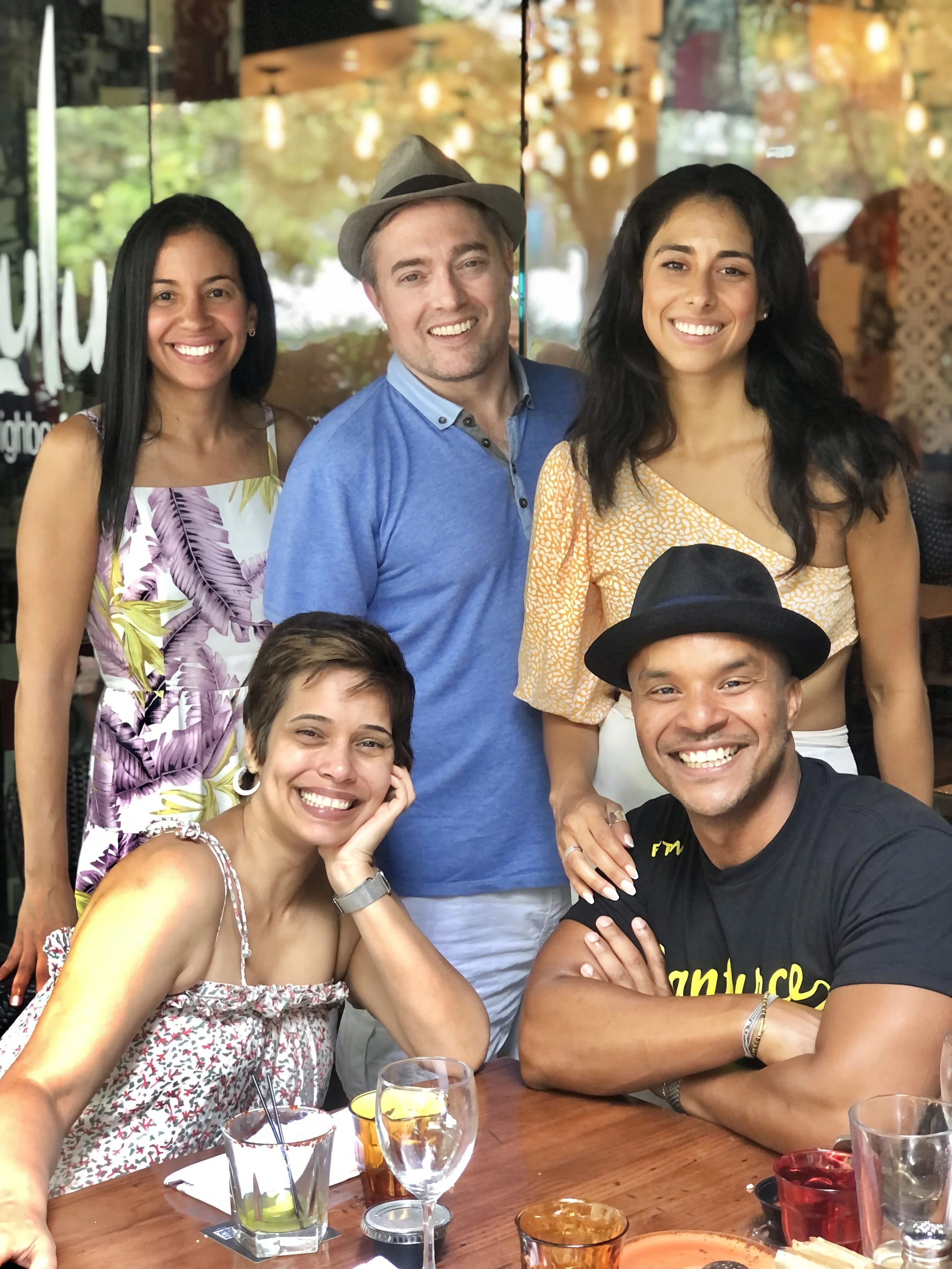
She is a woman with gravitas and warmth that could only be explained by a fire that burns inside someone who has fought hard not to let that light be extinguished. She is an archetype of the woman I strive to be, one that does not harden when confronted with difficulties. Instead she chooses to share her learnings she extracted from obstacles she overcame and coaches others to overcome.
Her work on resilience has become a powerful compass for many of us who have endured drastic changes to corporate diversity, equity, and inclusion policies, the automation of work, and massive company layoffs. In Auger-Dominguez’s Harvard Business Review piece titled How to Build Career Resilience in Uncertain Times, she professes the need to know thy self as the core component to building career resilience. Through self-assesment she asks us to take inventory of what is truly important. This allows us to determine what we are willing to give up in exchange for what we want. It’s especially important to know your non-negotiable at baseline before entering a high-stakes, high-stress environment as to not limit your desires by circumstances.
Auger-Domínguez advises developing a growth mindset so that individuals can continue up skilling as part of their daily schedule before they have a reason to apply to a new job or put themselves up for a promotion. The ability to stay relevant and dynamic in a changing employment landscape. With the support of a robust and diverse network of trusted relations, the turmoil of surviving layoffs or personal defeats becomes less daunting, more obtainable, with higher odds of success.
Auger-Dominguez’s urges us to continuously deepen relationships across diverse industries and experiences to cultivate a safety net of support similar to that of a trapeze artist who relays on a tightly knit rope to rebound from a misstep or a complex routine gone wrong.
Auger-Dominguez’s work is a well-research and tested methodology built in a high-tech modern environment yet in many ways describes the return to village life, where the survival of the individual is dependent on the strength of their community. Village life places the weight of individual struggles on the shoulders of the entire community. Maybe because life takes place in and around spaces in close proximity that often lack privacy or escape the watchful eye of nonnas, abuelas, nainais and their comare, comadre, and ganma. Maybe villagers have more agency than city folk because they control their own supply chains or are self employed?

It is more difficult to turn your back on someone in need when you can hear their cries through your window, its also easier to hand over an apple from your own harvest to the hungry little boy who’s father passed away a year ago.
The relationships in village life are weaved together through generations. Year after year of conflict, peace, marriage, abandonment, celebration, devastation, poor harvests, bounty. The eco-system is constantly tested and relies on the collective to make good choices. The most horrific form of punishment a villager can experience is to become an outcast. To loose one’s ability to socialize, commercialize their goods or services, and seek the protection of the collective is a death sentence. Just as quickly as a neighbor maybe willing to help, they too can turn their back on their own neighbor. Villages also echo scandal, gossip, judgment and fear.
This feels oddly familiar to the experience of a recently off-boarded employee. They too loose contact with the people they most often socialized with beyond 9-5 work schedules. An employee who’s been labeled redundant is no longer able to earn a wage through the sale of their goods or services in the marketplace—at least temporarily. Employers don’t just provide a wage, employment contracts often include beneficiary protections such as life insurance, health insurance, access to a lawyer for civil or domestic protection, and other protections. Which is why when an individual looses their job, they can often feel helpless.
We’ve replaced Village Life for Corporate Life, because we assumed there would be less risk getting ousted from a corporation than outcast from our village which is why so many of us chose to leave our mountain top village or rural fertile valleys, but I’d argue that we in fact have increased the scale of the issue to a grander size by the sheer volume of people who chose this same professional path.

Auger-Dominguez’s doesn’t just reinforce the value of practicing the skills of a villager, she has devised a strategy that helps us all mitigate the risk of getting outcasted and helps us all lessen the blow of professional setbacks by creating villages of our own choosing. She coaches us on how to build multidisciplinary inter-regional and even international villages that are unrestricted by the geography or socioeconomic status we were born into. She encourages us to leverage our skills and expertise to bring value to others and form community.
Auger-Dominguez cut her teeth formulating resilience practices in some of New York City’s most competitive environments across media, finance, and entertainment—industries that have been in constant upheaval for the last 15 years. I would know I too was a casualty of a media company who went belly up. What I find so interesting is that no matter how shinny a new job title may look or how cutting-edge, cool, or revolutionary a new industry can be portrayed— we must all rely on our archaic intuition and lived human experience to persevere.